
Trust comes up in almost every market opportunity and innovation study I work on, even when it’s not in the brief.
Clients ask about behaviour change, demand signals, proposition fit, adoption, partnerships, or stakeholder engagement. But once you start looking at what has to happen for people in any role to act, trust is usually somewhere in the machinery.
People need to trust a claim before they buy into it, a data source before they use its evidence, and a partner before they share risk. The same logic applies to processes, brands, platforms and programmes. If people are being asked to act under uncertainty, trust is part of the decision.
The argument I want to make is simple: if trust is needed for people to act, it has to be considered much earlier than the launch, consultation or communications plan. It is shaped by the way the offer, evidence, partnership or process is designed. Research can help by showing what people need to see, understand or experience before they feel confident to act.
Sometimes trust arrives after simple preconditions are met. Sometimes these are complex and multi-dimensional. At other times, trust is so elusive that achieving it relies on credibility borrowed from somewhere else. And often, it is only really tested after people have made a choice and seen whether the thing delivered on its promise.
Trust deserves early attention from anyone trying to introduce something new.
Not as a value or a message, but as one of the practical conditions that allows people to move from a state of uncertainty to one of action.
What a water sample can’t tell you
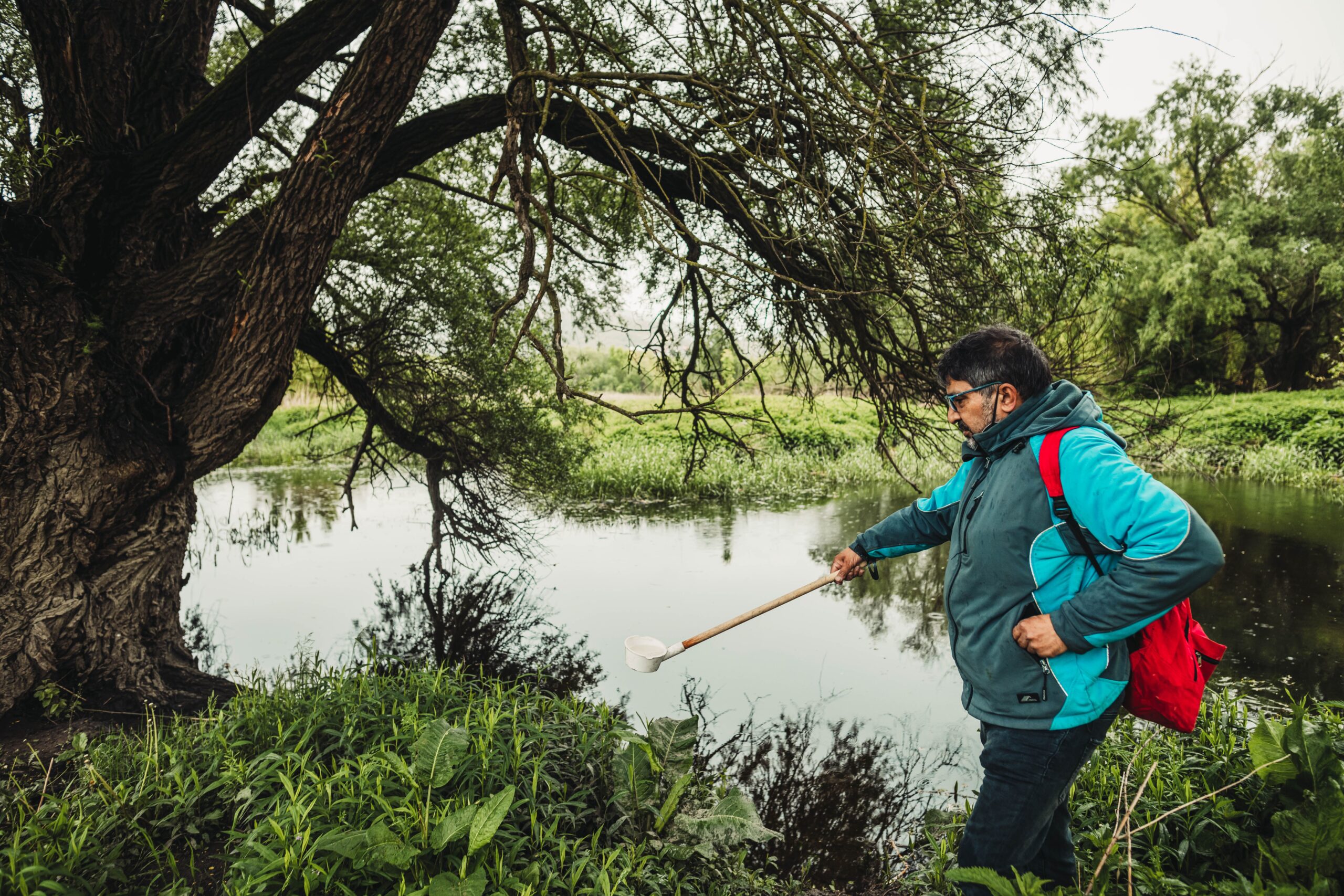
A sprint at last year’s Northumbrian Water Innovation Festival, connected to Stream’s work on citizen science and open water data, helped sharpen this for me.
The starting challenge was that citizen scientists today are collecting large volumes of potentially useful environmental data, but decision-makers may lack confidence in its quality, provenance and applicability. The bigger challenge is how that evidence sits alongside other sources, including regulatory monitoring, water company data, satellite signals, AI interpretation and local knowledge, in a shared picture that different organisations can act on.
At first, that sounds like a data quality problem.
Can the data be trusted?
But the more we discussed it, the more the question changed.
The distinction we kept coming back to was between being trustworthy and being trusted.
A water sample might be collected carefully, using an agreed method, by a trained volunteer. It might be genuinely useful. But if the person being asked to rely on it cannot see where in the system it came from, how it was collected, whether the equipment was calibrated, whether the protocol was followed, or whether anyone checked the result, they may still hesitate.
That is not necessarily resistance. It may be good judgement, because people are often being asked to make consequential decisions using information they did not produce, from systems they do not control, gathered by people they may not know. In that context, trust is not a feeling. It is an assessment.
The sprint shifted the question from:
“Can this data be trusted?”
to:
“What would someone need to know in order to decide whether they trust this data?”
That small wording change helped move the discussion on.
The work is no longer to assert trustworthiness. It is to make the basis for confidence visible.
Who collected it, how was it collected, and what happened to it afterwards? Was it checked? What is it suitable for? Where are its limits?
In data terms, this is about provenance. In everyday terms, it is about having enough of the backstory to judge how much weight to put on something.
Most of us understand this instinctively. We would feel uncomfortable buying a second-hand car based only on its price, mileage and colour. We would want to know who is selling it, whether it has a valid MOT, whether there is a record of previous accidents or major work, and whether the service history is complete. Not because any one of those things guarantees the car is perfect, but because together they give us a better basis for judging its condition and the risk we are taking.
Evidence-based information works in much the same way.
The result matters. But confidence often comes from knowing how the result was produced, and placed within the context of broader knowledge and insight.
Trust has to fit the workflow
This is not only true of citizen science or environmental data.
We have seen similar issues in work on digital mapping tools for infrastructure and planning. These platforms are often created to help different organisations see the same picture, coordinate decisions and act earlier. On paper, the value is clear.
But adoption does not follow automatically.
A planner, engineer, local authority officer or utility stakeholder may still ask practical questions before using the tool in their work. Is the data current? Where has it come from? Is it complete enough for this decision? Does it fit the way we already plan? Can I explain or defend the output if someone challenges it?
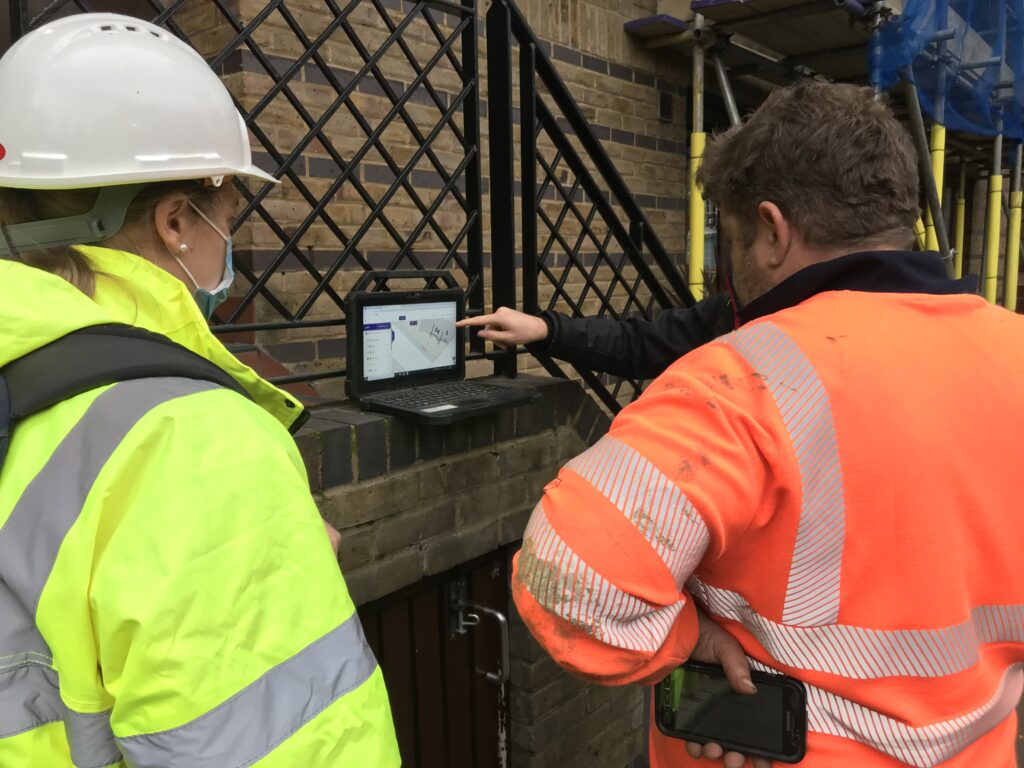
User research into infrastructure mapping tools for team coordination workflows. © Made with Insight.
If those questions are not addressed in the product, they cannot be solved by a better launch message. How data sources are labelled, how uncertainty is shown, how easily the tool fits existing workflows, whether users can question, correct or build on what they are seeing. In this sense, transparency is not separate from trust. It is how trust is made more practical.
A tool can be technically impressive and still fail to become part of everyday decision-making if people do not know when to rely on it, how much weight to give it, or what risk they are taking by using it.
Trust can travel
Trust is also shaped by who introduces, endorses or carries the offer of something new.
In place-based work to drive behaviour change, that may mean a respected local charity, school or community group is better placed to lead interventions than a public body with a different relationship to citizens. In commercial markets, new product and service launches may need to lean heavily on a trusted partner, platform or master brand.
That often changes the trust conditions around the proposition.
But borrowed trust is fragile. If the relationship-holder is treated only as a route to access, rather than as a partner with responsibilities of its own, then trust can be damaged for everyone involved.
The better question
So on to why I struggle with the idea that trust is something organisations can generate at the end. It would be easy to assume the sequence: Design the initiative or product. Publish the evidence. Put out the comms. Launch. Trust will follow.
But it often does not work that neatly.
Trust is shaped much earlier: by who is involved in defining the problem, whether assumptions are tested or hidden, whether evidence can be questioned, whether uncertainty is acknowledged, whether feedback loops are real, and whether people believe the theory of change presented.
This does not mean every project needs to become a full co-design exercise. That would be unrealistic and often unnecessary.
But it does mean trust is affected by design choices.
Who gets listened to. What gets tested. Which partners are involved. How evidence is processed and shared. How uncertainty is handled. Whether people are asked to trust a claim, or given enough information to make a judgement.
The better question is not:
“How do we make people trust this?”
It is:
“What would people need to see, understand or experience before they feel confident to act on it?”
That question works across commercial innovation, public programmes, data platforms, partnerships and place-based change.
It asks whether a desired outcome is clear, whether a buyer has enough confidence to switch, whether a resident believes engagement is worth their time, and whether a customer feels reassured by the provider or brand association, or made more wary by it.
This is where research is useful.
Research does not create trust on its own. What it can do is help teams understand where confidence already exists, where it has been lost or may be put at risk, what people are being asked to believe, and what would help them take the next step.
For me, that is the value of looking for it at the start.
The organisations that earn trust are not always the ones with the loudest story. They are often the ones that make it easier for people to judge the story for themselves.
At Made with Insight, we help organisations understand what people need to trust, choose and use new products, services, programmes and partnerships. That includes exploring the assumptions, evidence, relationships and workflow conditions that shape whether something will land in practice.
Get in touch if you are developing something new and need to understand what would help people feel confident to act: alistair.shutt@madewithinsight.com
